
Learning Center Latex You Can Verify
Latex Mattress Pros and Cons, Stated Plainly
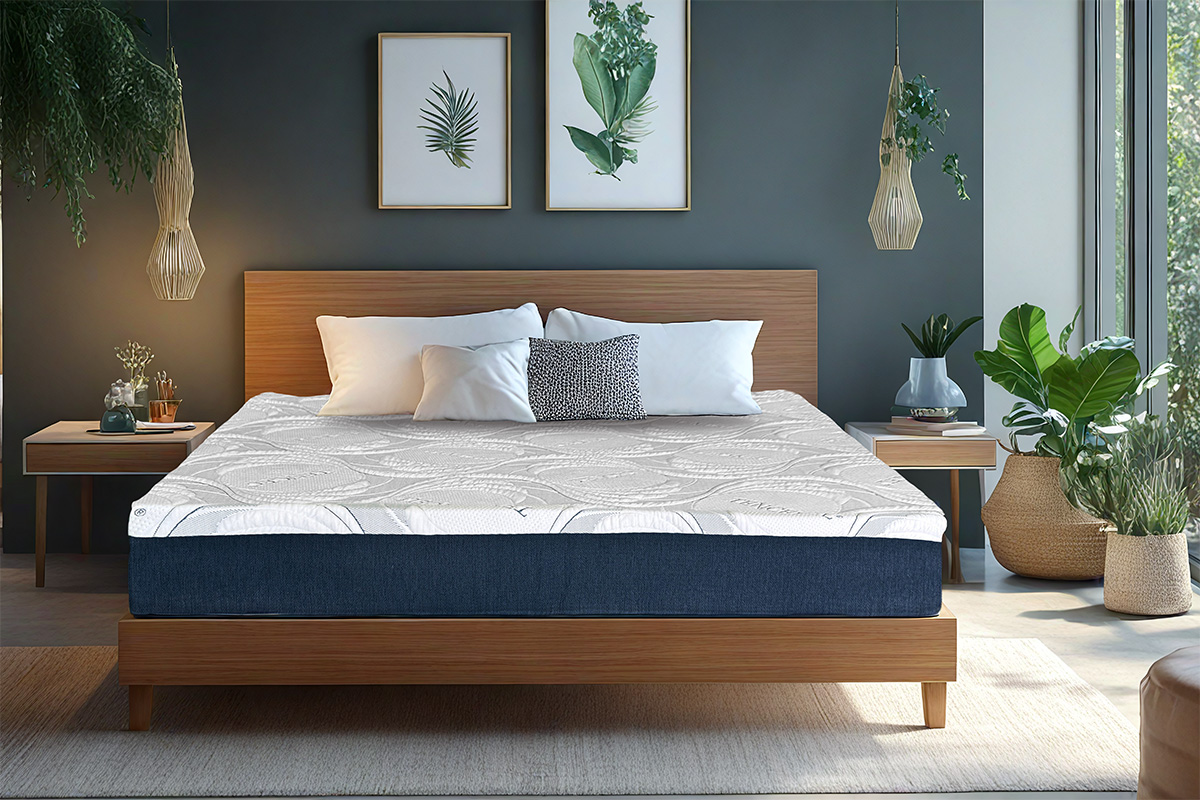
The latex mattress pros and cons come down to a short trade: you pay more at the start and you get a bed that is heavy to move, and in return you get a mattress that can last up to 20 years, resists dust mites and mold, and holds its shape instead of pitting in the middle. This page lays both sides out without the sales language, because anyone comparing latex mattresses pros and cons deserves to hear the drawbacks from the company selling them rather than from a review site that was paid to list them.
What is a latex mattress, and what are latex mattresses made of
Latex foam is made from the sap of the rubber tree. A maker whips the sap, pours it into a mold and cures it, and what comes out is a dense, springy foam. That is all a latex mattress is: one or more slabs of that foam, usually inside a fabric cover. What separates one from another is how much of it is really tree sap.
There are three categories, and the difference matters more than any other spec on the label.
- Natural latex mattresses are made using natural sap collected from rubber trees. Their organic composition means they do not contain harmful additives.
- Synthetic latex mattresses are made using petroleum based components that replicate the molecular structure of natural latex. Synthetic latex is styrene butadiene, which is a petro chemical product. These are the synthetic beds people end up with when they buy on the word latex alone.
- Blended latex mattresses are a combination of natural and synthetic components.
Natural latex itself comes in two kinds, Dunlop and Talalay. Both start with the same raw sap and different processes create them. Those methods produce varied looks, feels and usability, though their lifespans remain similar. So the Dunlop against Talalay argument is far less important than the natural against synthetic one.
This is where the word organic gets abused. Most latex mattress companies claim natural, or organic, or 100 percent latex, and unless it is certified GOLS latex you are taking a chance that what you are getting is not the pure sap of the rubber tree. The certification proves the foam is made only of the sap of a tree. We put the certificate up rather than the adjective, and you can read what it covers on our page about GOLS certified latex.
The pros of latex mattresses
Here are the latex mattress benefits that hold up, in the order they actually matter to people who sleep on one.
It lasts, and that is the whole case
A high quality organic latex mattress can last up to 20 years, roughly twice as long as a typical mattress. Mattresses in general run from 5 to 20 years depending on care, and natural latex sits at the top of that range. It is the most durable cushioning material we know of, and we have the law labels and letters to go with the claim. One customer wrote to us about two shredded latex pillows she has had since she was a little girl. She is 74, her sister is 78, and her sister remembers them from the 1950s. The longer version of this is on our page about how long a latex mattress lasts.
Comfort without the sinking feeling
When you lie on a typical mattress you get a sensation that feels like you are sinking into it. Latex has a natural spring that supports your body with minimal sink. A layered latex bed distributes your weight when you lie on it, which is why it does not produce the back pain that comes with older, sagging mattresses.
It supports the spine in any sleeping position
Because of that springiness you can adopt any sleeping style without fear of body aches. The foam sinks slightly under your heavier parts, the hip and the shoulder, and holds up the lighter ones, which keeps the spine in line. If back pain is the reason you are reading this, our page on the best back supporting mattress goes further into it.
No harmful chemicals
Chemicals used to make synthetic mattresses can be harmful to children and to people with allergies, which is a large part of the answer to whether a latex mattress is good for health. Our mattresses are the only beds made entirely without fire retardants. No chemical treatments, no toxic sprays or powders. No glass fiber, so there are no fiberglass shards in our beds. No silica treatments, which are respiratory irritants other makers use to pass the federal flame test. What the industry does instead is set out on our page about fiberglass in mattress covers.
It resists dust mites, mold and allergens
Latex naturally fights microbes, which makes it highly mold resistant, and its density and lack of a static charge repel dust, mites and allergens. There are few holes for buildup, so dust wipes away instead of working its way in. That is also why it is low maintenance: keep it dry and dust free and it handles the rest.
You can change one layer instead of the whole bed
This one is specific to how we build. Our beds are separate three inch layers in a zip cover, in six firmnesses: Ultra Soft, Soft, Medium Soft, Medium, Medium Firm and Ultra Firm. If the top layer is wrong for you, you change the top layer. On a split size you can set each half differently, so two people do not have to agree. You can see how it works on the build your own mattress page.
The cons of latex mattresses
Latex mattresses have real drawbacks that make them unsuitable for some people. These are the latex mattress disadvantages, and we are not going to soften them.
It costs more upfront
The remarkable comfort and durability come at a price. Most latex mattresses cost more because of their natural components, and the hefty price tag from many retailers puts this type of mattress out of reach for plenty of households. That is the single most common complaint about latex and it is a fair one. Our answer is that there is no substitute for quality no matter what the price, because quality is money savings, and a bed you keep for two decades costs less per year than one you replace every few years. But that is an argument about the long run, and the cheque you write is in the short run.
It is heavy and awkward to handle
All rubber mattresses without springs are very difficult to handle for flipping and rotating. Latex is less rigid than an innerspring bed, which makes it harder to maneuver, not easier. We ask you to rotate and flip the top two layers at least twice a year, and on a one piece latex bed that is a genuine chore. A layered build helps, because you move one three inch layer at a time rather than a whole mattress, but the material still weighs what rubber weighs. We cover the handling question on our page about whether latex mattresses need flipping.
Latex sensitivity
Although it is rare, some people suffer from allergies triggered by contact with latex or rubber materials. The American Latex Allergy Association has attributed these reactions to the various protein components found in the sap used to make latex beds. This may be the case for some mattress stores, but not Sleep Essentials, we have you covered. The materials we use, according to the FDA, show there have been zero cases of allergic reactions to the natural rubber we use in our latex foam products.
Body impressions, and what is normal
Latex does take a shallow body impression over time, and people reading about latex mattress problems online often find that discussed as a defect. It usually is not. Rotate the layers, flip them, shake them out, and in almost every case the measurable impression returns to its normal shape. That is the normal life of latex. It is rubber and it bounces back. Our warranty covers body impressions greater than 0.5 inches for ten full years, non prorated, and the terms are on the mattress warranty page. One clause there is worth knowing before you buy anything from anyone: stains do not void any aspect of our warranty. Every other company we know of uses the smallest stain to void a claim.
The natural smell, and hardening with age
New latex has a smell. It is the smell of rubber, it is not a chemical off gas, and it dissipates over time. Over many years latex also hardens and crusts a little, particularly with exposure to sunlight through a window. Neither is a fault and neither is a warranty issue, but both are real and you should know about them in advance.
So are latex mattresses worth it
If you replace a mattress every few years because it sags, latex is worth it, and the price difference pays itself back. If you want the softest possible surface at the lowest possible price and you do not care how long it lasts, it is not. If someone in the house has a diagnosed latex allergy, talk to us before you order anything rather than after.
The honest summary of the pros and cons of a latex mattress is that the cons are front loaded, the price and the weight, and the pros are spread over twenty years. That is an uncomfortable shape for a purchase, which is why so much of the industry sells you something cheaper that feels good in a showroom for ten minutes.
If you want to try before you commit, there is a showroom at 3542 Orange Ave NE, Roanoke, Virginia 24012, and the phone number is 540-397-2337. A free sleep consultation costs nothing and carries no obligation. If you are ready to look at builds, start with our organic latex mattresses, or try a latex mattress topper first if you want to feel the material on the bed you already own.
Common questions
What are the main pros and cons of latex mattresses?
The pros are durability of up to 20 years, support with minimal sinking, resistance to dust mites and mold, very low maintenance, and no fire retardant chemicals in our build. The cons are the higher upfront price, the weight, and in rare cases a latex sensitivity. Our layered build also lets you change one layer instead of replacing the bed.
What are the disadvantages of a latex mattress?
Price and weight, mostly. Natural latex costs more than foam because of the materials, and an all latex bed with no springs is very difficult to handle for flipping and rotating. New latex also has a natural rubber smell that dissipates over time, and over many years the foam hardens and crusts slightly.
Is a latex mattress good for your health?
The materials are the reason people say so. Chemicals used to make synthetic mattresses can be harmful to children and to people with allergies. Our beds are the only ones made entirely without fire retardants, with no chemical treatments, no glass fiber and no silica treatments, and the latex is certified GOLS organic.
Can you have an allergic reaction to a latex mattress?
It is rare but it happens. The American Latex Allergy Association attributes these reactions to protein components in the sap used to make latex beds. The materials we use, according to the FDA, show there have been zero cases of allergic reactions to the natural rubber we use in our latex foam products. If someone in the house has a diagnosed latex allergy, call us at 540-397-2337 before ordering.
Is Talalay or Dunlop latex better?
Neither, in the way people mean. Both start with the same raw sap and different processes create them, producing varied looks, feels and usability, but their lifespans remain similar. Whether the latex is pure or blended with synthetic matters far more than which process made it.
Do latex mattresses sag?
They take a shallow body impression rather than sagging the way a spring bed pits. Rotate and flip the layers, shake them out, and in almost every case the impression returns to its normal shape. That is the normal life of rubber. Our warranty covers impressions greater than 0.5 inches for ten years, non prorated.
How much does a latex mattress cost compared with foam?
More, upfront. We publish a starting price on each arrangement page and the final price depends on the size and whether you choose three or four layers, so the product pages are the accurate place to look rather than a figure quoted here. The long run arithmetic is different, because a bed that lasts up to 20 years is not replaced three times in that period.
What is the difference between natural, synthetic and blended latex?
Natural latex is made from sap collected from rubber trees. Synthetic latex is made from petroleum based components that replicate the molecular structure of natural latex, and it is styrene butadiene. Blended latex combines the two. Only a GOLS certificate proves the foam is made only of the sap of a tree.