
Learning Center What Is Inside a Mattress
Chemical Free Mattress: What Most Beds Contain, and What Ours Does Not
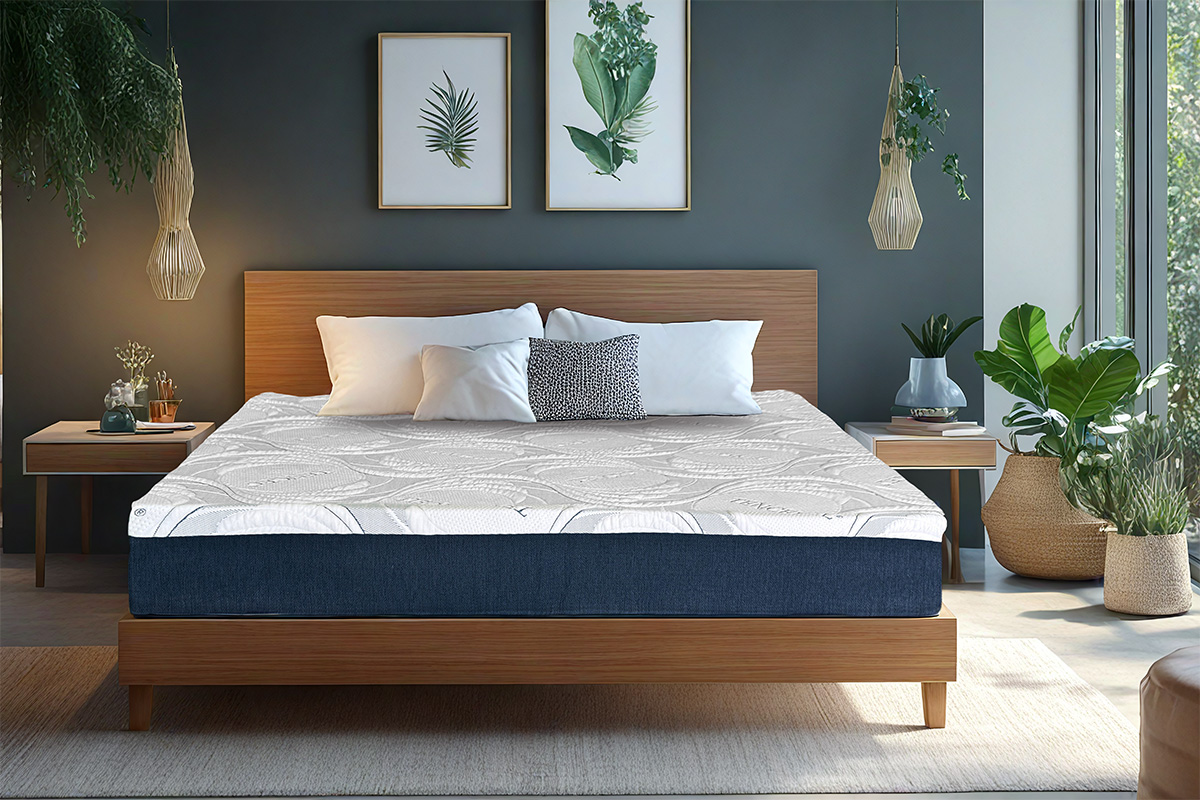
A chemical free mattress is one built without fire retardant chemicals, chemical barrier fabrics, glass fiber or petroleum based foam, and that is how Sleep Essentials builds every bed: certified GOLS latex in separate layers inside a zip cover, with nothing sprayed on it.
The four videos on this page are ours. The first, “The 2007 Law That Made Beds Toxic”, explains the federal rule that put fire retardant chemicals in beds. The second, “Thyroid Issues and Sexual Identity: Is Your Mattress the Hidden Cause?”, and the third, “The CPSC Secret: Why You Are Forced to Sleep on Toxic Chemicals Causing Skin Irritations”, look at what those chemicals can do. The last, “Who Makes the World’s Best Mattress?”, shows what we build instead.
Chemical-Free and Organic Mattresses
When purchasing a mattress for your home, it is important to understand the potentially toxic chemicals that come with certain materials of these products. Sleep Essentials is committed to meeting your needs with the positives of sleeping on an organic mattress.
According to CNET, there are long-term risks of chemical-filled mattresses such as fertility problems, neurological issues, as well as various issues in the kidneys, liver, thyroid, lungs, or heart. Let us learn more about the common mattress materials associated with certain toxic contaminants.
The following mattress materials usually contain a specific set of chemicals that were used in the production process:
- Polyfoam. The polyfoam material typically contains propylene oxide, toluene diisocyanate, benzene, dimethylformamide, and polyols.
- Flame Retardants. While a flame retardant product is meant to prioritize safety, they still contain chemicals such as polybrominated diphenyl ethers and halogenic flame retardants.
- Synthetic Latex. Synthetic latex is known for containing styrene and butadiene.
- Vinyl. Mattresses made of a material that offers moisture resistance contains phthalates, antimony, and other heavy metals.
- Additional Chemicals. Perfluorocarbons, trichloroethane, formaldehyde, and chlorofluorocarbons are additional chemicals that are typically found in a variety of mattress products.
Being informed on what chemicals are used in the production process of your mattress is beneficial to your health and understanding of bedding products. Do not hesitate to give us a call on 540-397-2337 to learn how you can find a chemical-free mattress.
See the 4 most popular organic latex mattressesor build your own
Material by material: what is in most beds, and what we use instead
This table puts the list above next to what goes into a Sleep Essentials bed. Read it as a checklist for any mattress you are thinking about.
| Material in most beds | What it typically contains | What we use instead |
|---|---|---|
| Polyfoam | Propylene oxide, toluene diisocyanate, benzene, dimethylformamide and polyols | Separate layers of certified GOLS latex |
| Flame retardants | Polybrominated diphenyl ethers and halogenic flame retardants | None. Our mattresses are the only beds made entirely without fire retardants |
| Synthetic latex | Styrene and butadiene | Certified GOLS latex, made only of the sap of a tree |
| Vinyl | Phthalates, antimony and other heavy metals | A zip cover that is 70% Tencel and 30% polyester |
| Additional chemicals | Perfluorocarbons, trichloroethane, formaldehyde and chlorofluorocarbons | No chemical treatments, no toxic sprays or powders |
| Glass fiber flame sock | Glass fiber woven into a knit sock around the foam | No glass fiber and no silica treatments |
Why most mattresses are not chemical free
Every mattress sold in this country has to pass a federal flame test. The only answers are chemicals on the materials, a chemical barrier fabric, or glass.
Most companies pick one of those three and do not say which. Ask any seller how their bed passes the flame test. A company that will not tell you has answered the question.
Glass fiber lets a company say it uses no harmful chemicals, because glass is not a chemical spray. If you want to know whether the bed you own now has it, our guide to fiberglass in mattress covers shows how to read the law label.
Our mattresses are the only beds made entirely without fire retardants. No chemical treatments, no toxic sprays or powders. No glass fiber and no silica treatments.
How to check any mattress for chemicals before you buy
You do not need a lab. Work through these in order, for any bed from any company, ours included.
- Read the law label. It is the tag sewn into a seam that says do not remove. It has to list what is inside the bed. Look for glass fiber, polyurethane foam and synthetic latex.
- Ask how the bed passes the federal flame test. Chemicals on the materials, a chemical barrier fabric, or glass. A plain answer is a good sign. No answer is an answer too.
- Ask for the latex certificate. Ask whose name is on it and what it covers. A word on a label is not a certificate.
- Ask what every layer is made of. Top to bottom, layer by layer, including the cover.
- Ask what happens if the firmness is wrong. With separate layers in a zip cover, one layer can be swapped. A bed built as one piece cannot be changed that way.
Our beds are built in Roanoke, Virginia, and ship nationwide. If you want to ask us any of these questions, call 540-397-2337 and you will reach the person who builds them.
Chemical free and non toxic are not quite the same search
This page goes material by material through what is in a mattress. If you are comparing beds and want the short list, our guide to the best non toxic mattress walks through what to look for and how to check any bed before you buy.
Both pages come to the same answer: look at what the bed is made of, how it passes the flame test, and whether the seller will show you proof.
What a Sleep Essentials mattress is made of
- Latex. Separate three inch layers of certified GOLS latex. You can see our GOLS certificate and its number.
- Cover. A zip cover that is 70% Tencel and 30% polyester.
- Firmness. Six firmnesses, Ultra Soft to Ultra Firm, chosen layer by layer.
- Nothing added. No fire retardants, no chemical treatments, no glass fiber and no silica treatments.
Because the layers are separate, you can swap one layer later instead of replacing the whole bed if the firmness turns out to be wrong for you.
Our organic natural latex page goes deeper into why the certification matters more than the word organic on a label.
Four arrangements, or build your own
Most people start with one of our four most popular organic latex mattresses, all from $1,300:
- AR1, our softest: Ultra Soft over two Medium Soft layers.
- AR2, our most popular: Soft over two Medium layers.
- AR3, firm support with a cushioned top: Medium Soft over two Medium Firm layers.
- AR4, our firmest: Medium Firm over two Ultra Firm layers.
Or build your own latex mattress and set the firmness of every layer yourself. Every bed comes with our 10 year non prorated warranty and our 60 day comfort assurance.
Find Chemical-Free and Organic Mattresses With Sleep Essentials
Sleep Essentials is proud to offer a selection of organic mattresses shipped to you anywhere in the continental US with no added shipping costs. A chemical-free mattress material ensures that your long-term health will not be negatively affected by the bed that you lay on every night. To learn more about finding a chemical-free mattress, contact Sleep Essentials today on 540-397-2337.
Check us out on social media
Facebook
YouTube
LinkedIn
X
Instagram
TikTok
Common questions
What is the best chemical free mattress?
Look for a bed with certified latex, no fire retardants, no glass fiber and a seller who shows you proof. Our mattresses are the only beds made entirely without fire retardants, built from certified GOLS latex, and our four most popular arrangements start from $1,300.
Do mattresses have chemicals in them?
Most do. Polyfoam typically contains propylene oxide, toluene diisocyanate, benzene, dimethylformamide and polyols, and flame retardants contain chemicals such as polybrominated diphenyl ethers. Every mattress has to pass a federal flame test, and the usual answers are chemicals, a chemical barrier fabric, or glass.
Is a latex mattress chemical free?
It depends on the latex. Synthetic latex is known for containing styrene and butadiene. Certified GOLS latex is made only of the sap of a tree, and that is what we use, with no fire retardants added.
How does a chemical free mattress pass the flame test?
Ask every seller this question. The only answers are chemicals on the materials, a chemical barrier fabric, or glass. Our mattresses are the only beds made entirely without fire retardants, with no chemical treatments, no glass fiber and no silica treatments.
How much does a chemical free mattress cost?
Our four most popular organic latex arrangements start from $1,300, shipped anywhere in the continental US with no added shipping costs, with a 10 year non prorated warranty.