
Learning Center How to Compare Mattresses
Firm vs. Soft Mattress: How to Make Your Choice
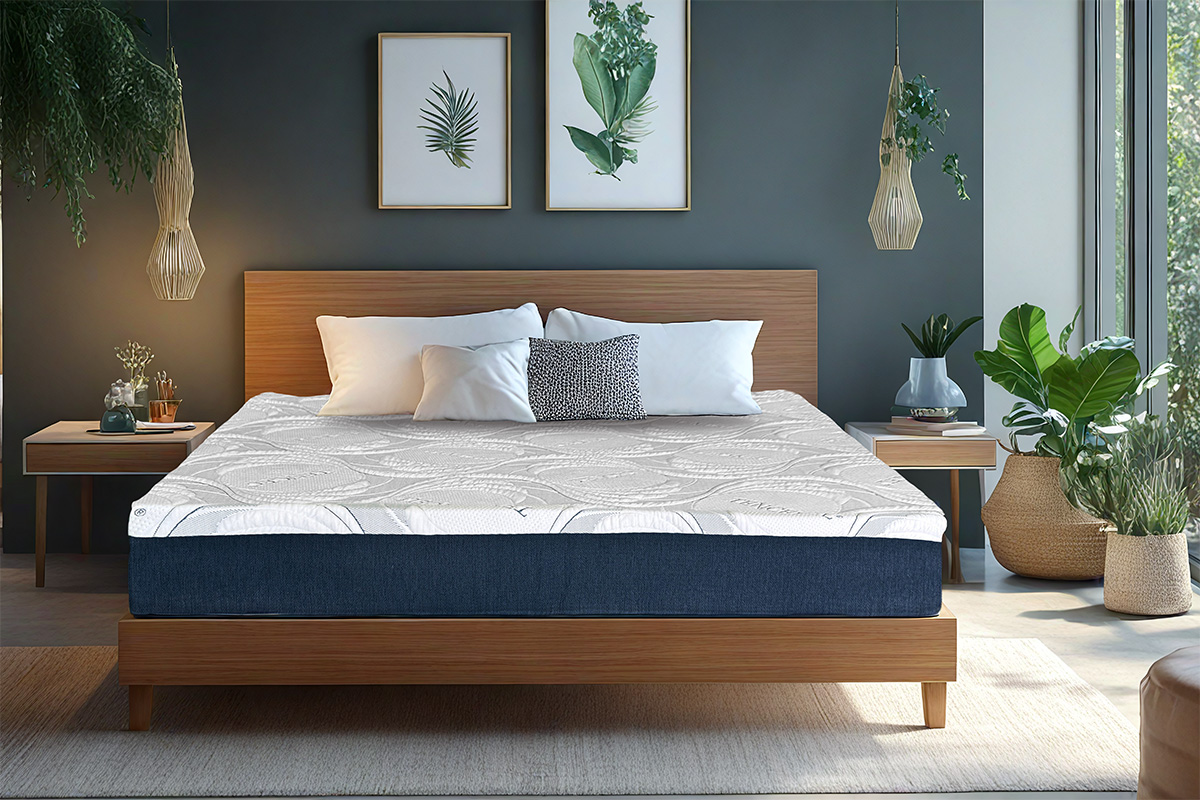
Firm vs soft mattress is the wrong fight: the right answer is firm underneath and softer on top, with how firm and how soft set by your body weight and the way you sleep. A one piece mattress has to pick one feel for its whole depth. A mattress built in layers does not, and that is how we build every bed.
Firm and soft are marketing words, not measurements. The same mattress feels firm to a lighter person and soft to a heavier one, because firmness is what happens when your weight meets the material. Below we go through what each one does for you, which you need for your sleeping position and your back, and the six firmness levels we actually build with, so you can choose by what is inside the bed instead of by the label on it.
Comfort and support are two different jobs
Every mattress has a comfort part and a support part. The comfort layer is the surface you feel: it cushions the shoulder and the hip and decides whether the bed feels soft or hard to the touch. The support layer underneath keeps your body in position so your spine holds its natural curve, and it decides whether your hips stay level with your shoulders or sink below them.
Most of the firm against soft argument comes from mixing those two jobs up. People who say firm are usually talking about support. People who say soft are usually talking about comfort. You need both, and you can have both, as long as they come from different layers.
Why choose a firm mattress
On a firm mattress your bones, not your muscles, are made to carry your body. That gives your muscles time off to relax and recover from the day before. A firm surface also stops the heaviest part of you, your hips and your lower back, from sinking into the mattress, which is the main way a bed causes back pain.
- Good for stomach sleepers, whose middle drops and arches the back on anything soft.
- Good for heavier bodies, which press further into any surface and need more under them.
- Good for anyone who wants to sleep flat, which matters most of all for the lower back.
The cost of firm all the way through is pressure. On your side, your weight lands on the point of the shoulder and the point of the hip, and a hard surface pushes straight back on both.
Why choose a soft mattress
A soft surface gives way under the shoulder and the hip and adds a layer of cushion that keeps you comfortable through the night. That is why side sleepers do well on a softer top: the shoulder and the hip sink in far enough for the spine to stay straight.
- Good for side sleepers and for lighter bodies, who do not press far enough into a firm surface to get any give from it.
- Good for sore joints and pressure points.
The cost of soft all the way down is support. Sink too far and your waist ends up holding you up, your spine bends like a hammock, and turning over means climbing out of a dip.
Firm or soft mattress for back pain
For back pain the answer is firm where it holds you and softer where you touch it. Firm layers underneath keep your hips at the same height as your shoulders so your lower back is not left spanning a dip. A softer top layer fills in the small curve of the lower back and relieves the shoulder and hip, instead of leaving a gap or a pressure point.
If your pain is in the small of your back, the rule is simple: stay firm under the hips for lower back pain, softer on top. For sciatica, a herniated or bulging disc or scoliosis, our guide to the best firm mattress for back pain takes each one in turn.
Is a firm mattress better for back pain?
Firm underneath, yes. Firm all the way through, usually not. A hard slab leaves a back sleeper’s lumbar curve with nothing under it and presses hard on a side sleeper’s shoulder and hip. A randomised trial published in The Lancet in 2003 compared a firm mattress with a medium firm one for people with chronic low back pain, and the people on the medium firm mattress did better than those on the firm one for pain in bed, pain on rising and disability.
That is exactly the shape of our AR3: a Medium Soft top over two Medium Firm layers. In Lee Carter’s words it is a firm surface with release pressure points, and a good choice for those who suffer from back pain or muscle pain.
The six firmness levels we build with
Instead of firm or soft, every layer we make comes in one of six firmness levels: Ultra Soft, Soft, Medium Soft, Medium, Medium Firm and Ultra Firm. Each layer is three inches of certified GOLS organic latex, and a mattress is three or four layers stacked inside a zip cover. The top layer decides how the bed feels. The layers under it decide how it holds you.
| Firmness level | Where it goes in our four arrangements |
|---|---|
| Ultra Soft | The top of the AR1, our softest |
| Soft | The top of the AR2, our most popular |
| Medium Soft | The top of the AR3, and the middle and bottom of the AR1 |
| Medium | The middle and bottom of the AR2 |
| Medium Firm | The top of the AR4, and the middle and bottom of the AR3 |
| Ultra Firm | The middle and bottom of the AR4, our firmest |
With three layers and six levels there are 216 ways to stack them, which is a long way from a choice between soft, medium and firm. You can build your own layers from scratch, or start from one of our four arrangements.
Which arrangement by body and sleeping position
Your sleeping position is the biggest single factor. Stomach sleepers do best firm, side sleepers want a softer top, and back sleepers do best on medium firm. Body weight then moves you up or down. Here is how the four arrangements line up, in Lee’s words from the product pages.
| Arrangement | Top, middle, bottom | Who it suits |
|---|---|---|
| AR1, our softest | Ultra Soft, Medium Soft, Medium Soft | Plenty of softness and endless support. Lighter body weights, side sleepers, anyone who loves a soft bed |
| AR2, our most popular | Soft, Medium, Medium | Comfortable without being too soft or too firm. Reduces pressure points on hips and shoulders, ideal for side sleepers |
| AR3, firm with a cushioned top | Medium Soft, Medium Firm, Medium Firm | Back sleepers, back pain or muscle pain. Shoulders and hips sink in while the back stays supported |
| AR4, our firmest | Medium Firm, Ultra Firm, Ultra Firm | Heavier body weights, stomach sleepers, anyone who wants a truly firm bed. People over 250 pounds |
See the four arrangements side by sideCompare every layer in our mattress comparison chart
Side sleepers with a sore shoulder or hip should also read our guide for side sleepers with shoulder pain, and if you change position through the night, see how sleeping position changes what you need.
Spinal alignment is the real test
Whatever you choose, your neck, middle back and lower back should end up in a straight line on your side and in their natural curve on your back. When your spine is aligned you breathe better, the pressure comes off your joints and your muscles ease. A misaligned spine may not cost you hours of sleep, but you wake up more tired and sore than you went to bed.
Your body will try to adapt to a mattress that is wrong for it, and for a while it will. Do not stretch that too far. Forcing your body to adapt to a bed that is too hard or too soft is how you end up with aches during the day.
If you choose wrong, change a layer
No page can tell you how a mattress will feel in the third week. That is why our beds come apart. If the top is a step too soft or the base a step too firm, you change that one layer, not the bed. Under our 60 day Comfort Assurance, sleep on it at least twenty days, then call and we send you a new layer in the firmness you want, free, and you cover the shipping. Every bed also carries a 10 year non prorated warranty.
See the AR3 Organic Latex Mattress, From $1,300Call the person who builds them: 540-397-2337
Every bed is built in Roanoke, Virginia and ships nationwide. Call 540-397-2337 with your height, weight and how you sleep, and we will tell you which firmness to start from.
Common questions
Should a mattress be firm or soft?
Both, in different layers. Firm underneath so your hips stay level with your shoulders, softer on top so your shoulder and hip are not pressed against a hard surface. How firm and how soft depends on your weight and your sleeping position.
Is a firm or soft mattress better for side sleepers?
A softer top over firmer support. On your side your weight lands on the shoulder and the hip, so the top layer needs enough give for them to sink in. Our AR2, Soft over two Medium layers, helps reduce pressure points on your hips and shoulders, making it ideal for side sleepers.
Is a firm mattress good for stomach sleepers?
Yes. A soft bed lets a stomach sleeper’s middle drop and arches the lower back all night. Our AR4, Medium Firm over two Ultra Firm layers, is our firmest arrangement and gives you the support you need to sleep flat.
What firmness is best for back sleepers?
Medium firm. Firm layers under the hips with a softer top that fills in the curve of the lower back. That is our AR3, Medium Soft over two Medium Firm layers, a good choice for those who suffer from back pain or muscle pain.
Does body weight change how firm a mattress feels?
Yes. Firmness is what happens when your weight meets the material, so the same mattress feels firmer to a lighter person and softer to a heavier one. Lighter bodies usually start at the AR1 or AR2, heavier bodies at the AR3 or AR4.
What if I choose the wrong firmness?
You change one layer, not the bed. Sleep on it at least twenty days, then call inside sixty and we send a new layer in the firmness you want free, and you pay the shipping. That is our 60 day Comfort Assurance.