
Learning Center How to Compare Mattresses
Mattress Comparison Chart
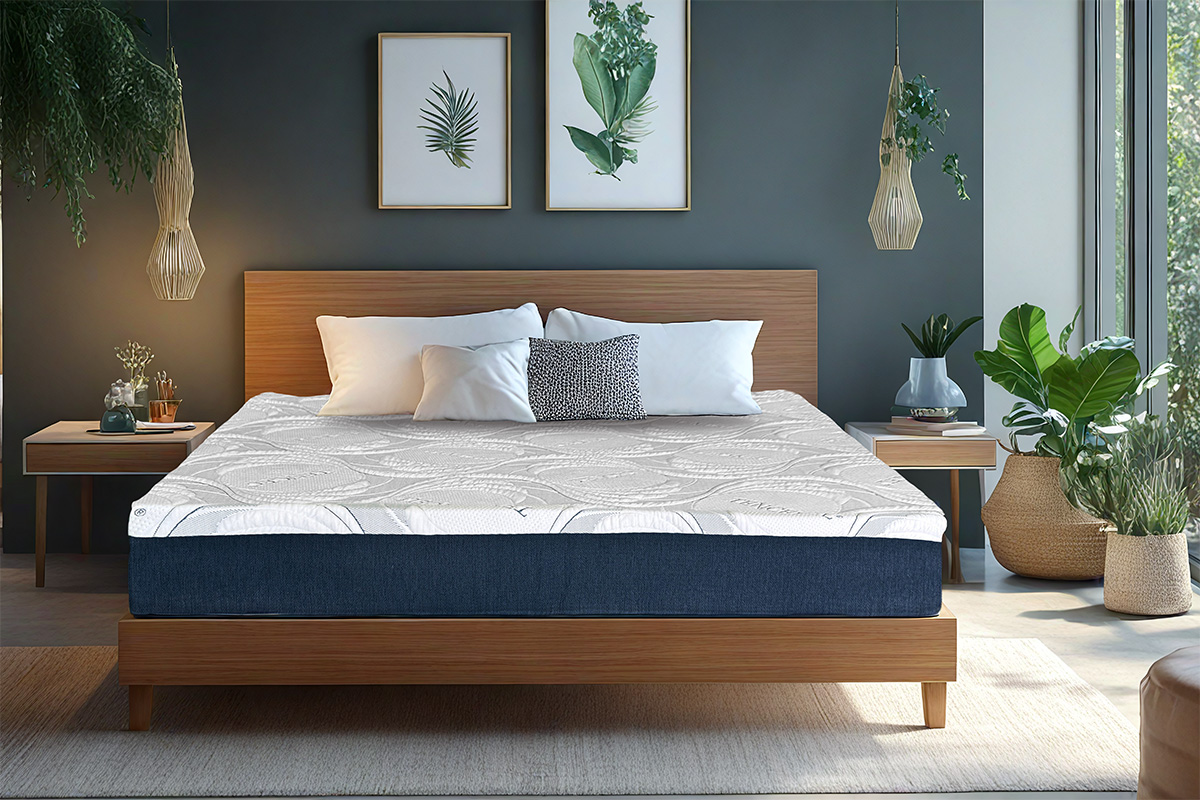
This mattress comparison chart sets natural latex side by side with memory foam, innerspring, hybrid and pillow top beds, in plain words, with no winner decided before the reading starts. A quick glance chart is still the easiest way to evaluate different constructions, so we have simplified the research below. It compares what each bed is made of, how it handles body heat, what happens when one person moves, how the edge holds up, how long the construction tends to last, whether the firmness can be changed after the money is spent, and what it costs to put right when the feel turns out wrong. Latex wins some of those rows. It loses others, and we say so.
How to compare mattresses in seven steps
Most shopping goes wrong in the same way. People start with brand names, then try to work backwards to a feel. Reverse it. Here is how to compare mattresses in an order that actually narrows the choice.
- Step one. Write down how you sleep now. Side, back, front, or a mix. Whether you wake with a sore lower back, sore shoulders, or hot. Whether you wake when the other person turns over. Those four notes decide more than any review will.
- Step two. Decide the feel before the brand. Soft and firm are not grades. They are preferences, and they are tied to your weight and your sleeping position. A light side sleeper and a heavy back sleeper will not be happy on the same surface.
- Step three. Compare the construction, not the name. There are only a handful of real constructions in the whole market. Once you know which construction you want, the shortlist of sellers takes care of itself.
- Step four. Ask what happens if the firmness is wrong. This is the question almost nobody asks in the showroom and almost everybody asks three weeks later. Get the answer before you buy, not after.
- Step five. Check whether one part can be replaced. A bed built as one sealed unit can only be returned or lived with. A bed built from separate parts can be adjusted.
- Step six. Match the size to the people in it. Two adults with different firmness needs are a size and layout problem, not a compromise problem.
- Step seven. Read the comfort policy and the warranty last. By then you know what you are protecting, so the wording means something.
That is the whole method. Seven notes on a piece of paper will beat an afternoon of mattress comparisons read off a phone.
The mattress comparison chart
No colour codes and no scores out of ten in this chart, because a colour tells you nothing about whether a bed suits you. Words only. Read down the row you care about most.
| What you are comparing | Natural latex | Memory foam | Innerspring | Hybrid | Pillow top |
|---|---|---|---|---|---|
| What the material is | Rubber tree sap, whipped with air and cured into an open cell foam rubber. Organic latex layers carry their own certification. | Petroleum based polyurethane foam, chemically altered so it softens under body heat. | Steel coils with a thin layer of padding above them. | Steel coils with a foam or latex comfort layer bonded above them. | Any of the above with an extra soft padded panel stitched to the top. |
| How it handles heat | Open cell structure with pinholes through the layer, so air moves. Sleeps cooler than solid foam, but it is not actively cooling. | The weakest of the five here. The material is designed to respond to heat, so it holds heat against the body. | Best of the five. Air moves freely through the open coil space. | Better than memory foam, worse than an open coil, decided entirely by what the comfort layer is made of. | Usually the warmest version of whatever is underneath it, because the extra padding sits between you and the air. |
| Motion transfer between two sleepers | Very good. Latex absorbs movement locally instead of passing it along. | Very good. This is memory foam at its strongest. | The weakest of the five. Connected coils pass movement straight across the bed. | Good, because the comfort layer soaks up most of what the coils pass on. | Slightly better than the same bed without the panel, since the padding muffles small movement. |
| Edge support | Good. A latex layer is the same material all the way to its edge, so there is no soft border to roll off. | Often poor, unless a firmer foam rail is built around the perimeter. | Good when a reinforced perimeter coil is fitted, poor when it is not. | Usually good. The coil unit does the edge work. | The weakest of the five. The soft panel compresses first at the edge, which is exactly where people sit. |
| Typical lifespan | Longest of the five, and the reason is the material. Cured latex keeps its shape instead of thinning. | Shortest of the five in normal use. Softening and body impressions are the usual end. | Middle. The coils normally outlast the thin padding above them, and the padding is what you feel. | Middle to long, decided by whichever part fails first. Normally the comfort layer, not the coils. | Shortest in practice. The stitched panel flattens well before the mattress under it is worn out. |
| Can the firmness be changed after purchase | Yes. Any single layer can be exchanged for a different firmness, so the bed is re-tuned rather than replaced. | No. The feel is glued in at the factory. | No. A topper can be added over it, but the bed itself cannot be changed. | No. The comfort layer is bonded to the coil unit. | No. The panel is stitched into the cover. |
| What it costs to put right when it is wrong | The price of the one layer that is wrong, and it ships to you. | A return, an exchange for another sealed mattress, or living with it. | A topper on top, or a new mattress. | A return or a new mattress. There is no part to swap. | A new mattress. The panel cannot be lifted off and replaced. |
| Weight and handling | The heaviest of the five. Latex is dense, and a full build is a two person lift. | Light to moderate. Usually easy to move alone. | Moderate. | Heavy, because of the coil unit. | Slightly heavier than the same bed without the panel. |
| Starting cost | Higher at the start than any of the other four, and that is the honest trade. | The cheapest way into a new bed. | Inexpensive at the entry level. | Mid to high. | Adds cost to whatever it is stitched onto. |
Mattress construction comparison, one construction at a time
A chart shows the shape of the decision. This mattress construction comparison fills in the why, and it weighs the positives and the negatives of each construction style rather than listing the good points of one of them.
Natural latex
Latex is foam rubber made from the sap of the rubber tree. It is whipped with air and cured, which leaves an open cell structure full of tiny channels. That structure is why it pushes back rather than sinking, why air can move through it, and why it does not thin out the way a solid plastic foam does. It supports the heavier parts of the body without letting the lighter parts float, which is what people mean when they say a bed keeps the spine straight. Against it: latex is dense, so it is heavy, and the raw material costs more than petroleum foam, so the bed costs more at the start. If you want the long version, we set out the honest pros and cons of a latex bed separately.
Memory foam
Memory foam is polyurethane foam treated so that it softens where the body warms it. That is genuinely good at two things. It isolates movement, so a restless partner is less of a problem, and it conforms closely, which some people find relieves pressure at the hips and shoulders. The same chemistry is also its weakness. A material built to respond to heat will also store it, which is why hot sleeping is the most common complaint about it, and a material that softens under warmth and weight keeps on softening over the years. A body impression is not a fault in memory foam. It is the material reaching the end of doing its job.
Innerspring
Steel coils with a thin layer of padding on top. The best thing about an open coil bed is airflow, and nothing else in this mattress comparison chart beats it for sleeping cool. It is also the cheapest honest bed on the market. The problems are motion and feel. Coils joined to each other pass movement across the bed, and because the padding above them is thin, the comfort you actually feel is the part that wears out first while the springs underneath are still perfectly sound.
Hybrid
A coil unit with a foam or latex comfort layer bonded on top. A hybrid is an attempt to buy the airflow and support of coils and the pressure relief of foam in one unit, and it does land in the middle of most rows above. The catch is in the bonding. Because the comfort layer is fixed to the coils, the part most likely to wear out is the part you cannot remove, so a hybrid that goes soft is a whole mattress to replace, not a layer.
Pillow top
A pillow top is not a construction of its own. It is an extra soft panel sewn onto the top of one of the other four. It feels wonderful in a showroom, which is exactly why it sells. In use it is the shortest lived surface in this comparison, it is the worst of the five at the edge where people sit down to put their shoes on, and it cannot be replaced on its own because it is stitched into the cover. If you want that plush feel, a separate topper you can lift off and replace does the same job without taking the whole mattress with it when it flattens.
Mattress durability comparison, and the one question behind it
Every mattress durability comparison comes down in the end to a single question that has nothing to do with materials. When this bed stops being right, what can I do about it?
For four of the five constructions above, the answer is the same. Nothing, or buy another bed. The comfort layer is glued, bonded or stitched into a sealed unit, so there is no part to take out. That holds whether the bed cost a little or a lot.
A latex mattress built from separate layers answers it differently, and this is the one place where the advantage is structural rather than a matter of opinion. The bed is a Top Layer, a Middle Layer and a Bottom Layer inside a Cover. Each layer is its own piece. If the top is too firm after a month of real sleeping, that one layer is exchanged and the rest of the bed stays exactly where it is. If a shoulder problem develops three years later, the top layer changes again. No other construction in this comparison can do that, and it is the honest reason a layered latex build takes the durability row. It is not that nothing ever needs changing. It is that changing it costs one layer instead of one mattress, which is why a latex bed can last for decades rather than a few years. We go into the detail of how long a latex mattress lasts in its own article.
Where latex loses
A comparison in which one option wins every row is a sales page, and nobody believes it. So here are the rows latex does not win.
- Weight. Latex is the heaviest material here. A full build is a two person job to move, and that is a real consideration if you rearrange rooms often or live up a narrow staircase.
- Price at the start. Rubber tree sap costs more than petroleum foam, and the bed reflects it. You can buy a memory foam or an entry level innerspring bed for less money today.
- Cool sleeping. Latex breathes well for a foam, but an open coil bed moves more air than any foam does. If sleeping hot is the only thing you care about, coils take that row outright.
- The showroom test. Latex pushes back. If you lie down expecting the sinking feel of memory foam, latex feels firm and unfamiliar for the first few minutes. It is a feel worth getting used to, but it does not win you over in ten seconds the way a pillow top does.
How a layered latex bed is actually put together
Since the layers are the reason the durability row goes the way it does, here is the build in full.
- Three layers and a cover. You choose a Top Layer, a Middle Layer and a Bottom Layer, and they sit inside a Cover.
- Six firmnesses. Ultra Soft, Soft, Medium Soft, Medium, Medium Firm and Ultra Firm. They are described in words, never in colours, because a colour tells you nothing about how a layer will feel under your hip.
- Two cover depths. Standard 9 Inch and Deep 12 Inch.
- Sizes from Twin up to Family King, including Split sizes where the two halves can be different firmnesses. That is the clean answer for two adults who disagree, and it beats compromising on one surface. The widest options are gathered under super king sizes.
- Any single layer can be exchanged later. This is the part that changes the whole comparison. Covers and layers are sold on their own as well, so you can see what the individual pieces are before committing to a whole bed.
- Adjustable bases. Southerland Sleep G94, G96 and B26 bases are available if you want the head or the foot raised. A layered latex mattress flexes with a base rather than fighting it. The bases are listed with the adjustable bed range.
If you would rather pick a feel than engineer one, there are ready arrangements already set up, and every one of them is still changeable layer by layer afterwards. If you are still deciding between a plush surface and a supportive one, start with choosing between firm and soft, then come back to this chart.
Mattress brands ranked, and why that is the wrong list
People search for mattress brands ranked, and it is an understandable thing to want. The trouble is that a ranking of companies is mostly a ranking of marketing budgets and this month’s discounts, and it changes every quarter. The construction underneath does not change. A company selling a bonded foam unit this year will still be selling a bonded foam unit next year, whatever position it holds on somebody’s list.
So rank the things that stay true. Rank the material. Rank whether the firmness can be changed after purchase. Rank what it costs you to fix a wrong decision. Those three questions sort the whole market faster than any league table, and they are the reason this page is a comparison of constructions rather than a scoreboard of names.
Mattress reviews comparison, and how to read one
A mattress reviews comparison is useful for exactly one thing, which is spotting the same complaint repeated by many different people. It is close to useless for deciding whether a bed will suit you, because the reviewer’s weight, sleeping position and expectations are usually missing, and those are the three things that decide the outcome.
So read reviews for patterns, not for verdicts. Sleeping hot, repeated over and over, is a fact about the material. A dip in the middle, repeated over and over, is a fact about the material. One person calling a bed too firm is not information, because you do not know what they weigh or how they sleep. Once you have the pattern, bring it back to the construction rows above and see whether what the bed is made of explains it. It usually does.
Questions people ask
How to compare mattresses without getting lost in brand names?
Use a short method. Write down your sleeping position, your main complaint about your current bed, and whether a partner’s movement wakes you. Pick the construction that answers those three notes from the chart above. Ask the seller one question, which is what happens if the firmness turns out wrong in a month. Then, and only then, look at who sells that construction and compare price and policy. Four steps, in that order.
Which mattress construction lasts the longest?
Natural latex, and the layered version lasts longest of all, because a single worn layer can be exchanged instead of the whole bed being retired. Pillow tops are the shortest lived surface, because the stitched panel flattens while the mattress beneath it is still sound.
Does a latex mattress sleep hot?
Cooler than memory foam, because the open cell structure and the pinholes through each layer let air move. Not as cool as an open coil innerspring, which has nothing but air between the coils. If sleeping hot is your single biggest problem, say so before you choose layers, because the cover depth and the top layer firmness both change how far you sink in, and how far you sink in changes how warm you sleep.
Can I really change the firmness after I buy?
Yes. Any single layer can be exchanged for a different firmness. Three layers and a cover means the Top Layer can change without touching the Middle or the Bottom. This is the one thing in this whole comparison that no sealed foam, innerspring, hybrid or pillow top mattress can offer, because in those beds the comfort layer is glued, bonded or stitched in place.
Are latex mattresses heavy, and does that matter?
They are the heaviest of the five constructions here, and it matters on the day it arrives and on the day you move house. It does not matter on any other day. Because the bed ships as separate layers and a cover rather than one sealed slab, each piece is handled on its own, which makes the build easier than the total weight suggests.
My partner and I want different firmnesses. What do we do?
Buy a Split size. The two halves are specified separately, so one side can be Soft and the other Medium Firm, under one cover and in one bed. On any sealed mattress the two of you are negotiating over a single surface, and somebody loses that negotiation every night.
Is organic latex the same thing as a certified bed?
No, and the distinction matters when you compare mattresses. Certification applies to the latex components themselves, not to a finished bed. Organic latex layers are a real, documented thing, and a complete mattress is an assembly that also includes a cover and other parts. Ask any seller which specific components the certificate covers, and ask to see the certificate itself.
Is a chart enough to choose a bed?
A chart narrows five constructions down to one, which is most of the work. What it cannot tell you is which firmness suits your hip. For that, either lie on the layers in the showroom in Roanoke, Virginia, or start from a ready arrangement and change the one layer that is not right. Talking it through on 540-397-2337 takes about as long as reading this page.
Where to go from here
If the construction rows above pointed you at latex, the next decision is layers and cover depth, not brand. If they pointed you somewhere else, that is a useful result too, and we would rather you knew now than after delivery. Either way, the rest of the reading is gathered in the mattress buyer’s guide, and the full range of layers, covers, sizes and bases is in the shop. Latex mattresses you build layer by layer, from a showroom in Roanoke, Virginia, shipped nationwide.