
The Best Non Toxic Mattress, and How to Tell One Apart
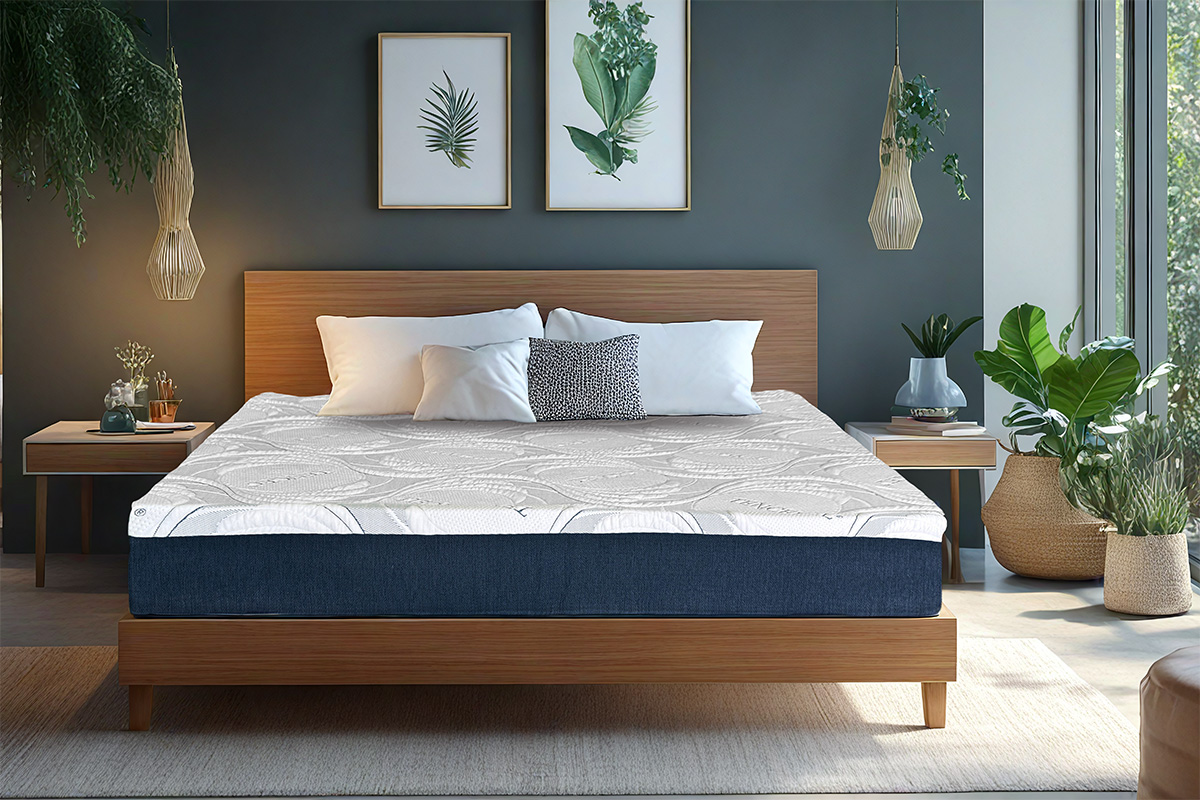
The best non toxic mattress is one with nothing in it that has to be hidden: no fire retardant chemicals, no glass fiber, no silica treatments, and a core of certified GOLS organic latex you can unzip and look at. That is what we build. Our mattresses are the only beds made entirely without fire retardants.
That is the short answer. The rest of this page explains why so few beds can say the same, the three ways every other mattress passes the federal flame test, the words on a label that give it away, and what is inside ours instead.
Why “non toxic” on a mattress label often means very little
The word “organic” is the most misused marketing term in the mattress industry today, and “non toxic” is right behind it. Many brands use these labels to hide inferior materials or toxic additives. A certificate on one part of the bed is presented as if it covered the whole bed.
A foam certificate covers the foam it was issued for. It says nothing about the cover, and the cover is where a lot of the trouble is. That is how a bed can be sold as non toxic while a large share of the fabric around it is glass.
So judge the bed, not the badge. There is one question that separates a truly non toxic mattress from one that is only marketed that way: how does this mattress pass the federal flame test?
The three ways a mattress passes the flame test
Every mattress sold in this country has to pass a federal flame test. There are three practical ways to pass it, and a company that will not tell you which one it uses has answered the question.
| How the bed passes | What is in your bed |
|---|---|
| Chemicals on the materials | The foam, fabric or wool is treated with fire retardant chemicals |
| A chemical barrier fabric | The foam is wrapped in a barrier fabric laced with chemicals |
| Glass fiber | The foam is wrapped in a knit sock woven with glass fiber, which chars into a shell instead of feeding the flame |
Glass fiber is the cheapest of the three, and it lets a company tell you it uses no harmful chemicals, because glass is not a chemical spray. It is not there for comfort, support or durability. It is a flame test, passed at the lowest possible cost, in a way that still reads well in an advertisement. We wrote a full guide on how to find fiberglass in a mattress, including the law label a customer brought us that lists glass fiber at 23 percent of the cover.
The chemical route has its own history. If you want to know what has been used, read our page on fire retardant chemicals used in mattresses.
The wool story
Plenty of companies now say they meet the fire standard with wool, or with a proprietary method. Here is the part they leave out. If wool could pass these tests on its own, no company would take the risk of putting cheap glass fiber in a bed.
Natural wool burns. To pass the federal test, a manufacturer has to treat that wool with fire retardant chemicals, or put a chemical laden sock underneath it. The wool you can see is doing the selling. The thing you cannot see is doing the passing. Companies name the things they are proud of, so a barrier that is described but never named tells you what you need to know.
What makes a mattress truly non toxic
A truly non toxic mattress has to clear every one of these, not just one:
- No chemical treatments. No toxic sprays or powders on any material.
- No glass fiber. No glass shards in the bed and no tag telling you never to open it.
- No silica treatments. No respiratory irritants used to pass a flame test.
- No synthetic latex. Synthetic latex is styrene butadiene, a petro chemical product, and some people have reactions to it.
- Proof of what the core is made of. Not the word “natural” or “organic” on a web page, but a certification you can check.
Most mattresses fail at least one of these. Many latex mattress companies claim “natural” or “organic” or “100 percent latex”, but unless it is certified GOLS latex, you are taking a chance that what you are getting is not the pure sap of the rubber tree. The mattress industry is FULL of deception.
What we build instead
There is no finished mattress that meets the flame standard without something harmful in it. That is why we changed our approach instead of arguing with it. We supply the high quality materials and you build the bed. Doing it that way, you avoid the regulations that force toxins or glass into the place you sleep.
What you get is layers of the organic latex we build with, a cover, and nothing added. While others use the organic label, we make a claim no other manufacturer can meet. Our mattresses are the only beds made entirely without fire retardants.
Certified GOLS organic latex
We build our beds using certified GOLS organic latex foam. The certification proves the foam is made only of the sap of a tree, and only the pure sap of the tree is the real durable foam. We do not blend our natural rubber with synthetic fillers. You can read what GOLS certification proves and why it is the only way to guarantee the most durable latex.
Nothing that needs a warning tag
Our cover zips open, and there is no tag telling you never to remove it. Inside you will find latex layers and nothing else. No chemical treatments, no sprays and no powders. No glass fiber, so there are no glass shards in the bed. No silica treatments, so there is no respiratory irritant in there to pass a flame test. We focus on quality materials rather than marketing junk or gimmicks.
Layers you choose and can swap
Each layer is 3 inches of latex in one of six firmness levels, from Ultra Soft to Ultra Firm. A bed is three or four layers inside a Tencel and polyester zip cover. Because the layers are separate, you can open the cover and see exactly what you sleep on. If your body changes, you swap one layer later, not the whole bed.
See the 4 most popular organic latex mattressesor build your own
Four ready arrangements, or build your own
We offer four distinct firmness models, AR1 through AR4, and each one starts from $1,300. These options satisfy the vast majority of our customers by providing optimal spinal support. You can compare our four most popular latex builds side by side.
| Arrangement | Layers, top to bottom | Made for |
|---|---|---|
| AR1 | Ultra Soft, Medium Soft, Medium Soft | Lighter body weights and anyone who loves a soft bed |
| AR2 | Soft, Medium, Medium | Our most popular. Extremely comfortable without being too soft or too firm |
| AR3 | Medium Soft, Medium Firm, Medium Firm | Firm support with a cushioned top |
| AR4 | Medium Firm, Ultra Firm, Ultra Firm | Heavier body weights, or anyone who wants a truly firm bed |
If you sleep on your side and your shoulder is the problem, our page on the mattress for side sleepers with a sore shoulder explains which arrangement to start from. If you would rather pick every layer yourself, build your own mattress layer by layer and change any layer later.
Latex compared with the foam in most beds
Most beds sold as non toxic are still built on poly foam and memory foam, with a certificate covering the foam. Latex is a different material. It comes from the sap of the rubber tree, it pushes back as soon as weight comes off it, and latex outlasts everything else in a bed. We set out the differences in latex foam compared with plastic foam, and what foam does as it breaks down in what memory foam dust is.
We would rather you know the trade offs before you buy. We wrote the honest pros and cons of latex so you can decide with them in front of you.
See the 4 most popular organic latex mattressesor build your own
How to check any mattress before you buy
- Ask how it passes the flame test. There are only three answers: chemicals on the materials, a chemical barrier fabric, or glass.
- Read the law label. It lists the materials by percentage. Look for glass fiber, fiberglass, glass filament or silica.
- Read the cover tag. A tag ordering you never to remove the cover is telling you something is in there.
- Ask which certificate covers which part. A foam certificate covers the foam, not the cover.
- Ask for the latex certification by name. “Natural” and “100 percent latex” are not certifications. GOLS is.
What comes with every bed
Every one of our beds is built in Roanoke, Virginia, and ships nationwide. Each comes with a 60 day comfort assurance and a 10 year non prorated warranty. If you want to talk it through first, call 540-397-2337 and ask the person who builds them anything you like, including about the label on the bed you have now.
Common questions
What is the best non toxic mattress?
One with no fire retardant chemicals, no glass fiber and no silica treatments, built on certified GOLS organic latex you can unzip and look at. Our mattresses are the only beds made entirely without fire retardants. We supply the materials, a cover and certified GOLS latex layers, and nothing is added.
Do non toxic mattresses have fire retardants?
Most do. Every mattress sold in this country has to pass a federal flame test, and there are three ways to pass it: chemicals on the materials, a chemical barrier fabric, or glass fiber. Our mattresses are the only beds made entirely without fire retardants, because we supply the materials and you build the bed.
Is a wool mattress non toxic?
Not because of the wool. Natural wool burns, so to pass the federal test a manufacturer has to treat that wool with fire retardant chemicals or put a chemical laden sock underneath it. The wool you can see is doing the selling. The thing you cannot see is doing the passing.
Is a latex mattress non toxic?
Only if the latex is real. Synthetic latex is styrene butadiene, a petro chemical product, and some people have reactions to it. Certified GOLS latex proves the foam is made only of the sap of the rubber tree. We build with certified GOLS organic latex and do not blend in synthetic fillers.
How do I know if my mattress has fiberglass?
Read the law label sewn into a side seam or the bottom of the mattress. Look for glass fiber, fiberglass, glass filament or silica. Then read the cover tag. A tag ordering you never to remove the cover is telling you something is in there.
What does GOLS certified mean?
GOLS is the Global Organic Latex Standard. The certification proves the latex is made only of the sap of a tree. Many companies claim natural, organic or 100 percent latex, but unless it is certified GOLS latex, you are taking a chance on what you are getting.
How much does a non toxic latex mattress cost?
Our four arrangements, AR1 through AR4, each start from $1,300. You can also build your own mattress layer by layer and see the price as you choose each layer and size.
Can I change the firmness later?
Yes. Our beds are separate latex layers inside a zip cover, so you swap one layer later, not the whole bed. Every bed comes with a 60 day comfort assurance and a 10 year non prorated warranty.