
Learning Center How to Compare Mattresses
What is the best mattress in 2026? Reviews aren’t what they seem. They are actually promotion paid for by the very mattresses being reviewed.
Mattress shoppers rely upon search engines and increasingly AI to help them shop for a mattress. Unfortunately, they will often find mattress review websites and YouTube channels with people reviewing different mattress brands and types, and supposedly what each type is good for like side sleeping, stomach sleeping, hip pain, shoulder pain, and all the typical issues people will ask about when shopping. This is unfortunate because most all are not organic and real mattress reviews, but instead biased paid-for promotions disguised as honest reviews. The purpose of this article is to expose the gig, and help mattress shoppers find REAL and very VALUABLE information they will find nowhere else.
Almost everything about the mattress industry is fake. That promoted everywhere 4th of July sale, to the New Years Day sale is never a real sale. In almost all instances of these promotions the prices have been marked up before they’ve been marked down in order to create the appearance of great savings. In some instances, the sale price is actually a touch higher than the price people could get when they are not promoting a sale. An example of this is the published and often shared “Manufacturer’s Suggested Retail Price.” This published price is a very inflated price to work down from so it makes retailers look like they are extending great savings to shoppers. This is just ONE of the endless examples of the fraud and lies that are told in the mattress industry that this article intends to expose.
The next fraud perpetrated by mattress companies that no “review” YouTube channel ever mentions is the mattress company’s fake warranties. This is where they advertise and promote a long-term warranty, and in some cases a “Lifetime Warranty” but it is never explained that the fine details in the warranty actually exclude from coverage the very thing that will go wrong with their mattress. And these “review” websites and channels never explain this very important issue. When a discerning reader of these warranties pays close enough attention, they will notice the warranty is telling you what WILL go wrong with their mattress by what is not covered. So, when a company excludes softening of the foam, they are thus telling you their foam WILL soften. When they exclude from coverage body impressions under 1.5 inches, they are telling you their mattress will body impress and they know you will get rid of the mattress for a lack of support and comfort BEFORE the body impression gets that deep, so their warranties cover NOTHING. These two small seemingly insignificant details are huge red flags that should cause shoppers to step back and think twice. But sadly, too few mattress buyers read the fine print of the warranty only to find out later when they actually complain to the mattress warranty department that their issue isn’t covered.
The next very important issue never talked about by mattress “reviewers” is the flammability standards set by the Consumer Product Safety Commission back in 2007 requiring mattresses to be flame retardant. The flame-retardant standards are so strict that many mattress companies use or have used toxic fire-retardant chemicals. All of the potential chemicals that could be used are listed by the Consumer Product Safety Commission as toxic in their own risk assessment. Some companies are claiming they use wool as a natural flame barrier but wool burns by itself and under certain circumstances, depending on how a mattress is made and what it is made with, wool requires boric acid to supplement the wool. The following is quoted from Google’s AI Gemini:
The “System Test” Catch: Why Untreated Wool Can Fail
Because 16 CFR 1633 tests the entire finished mattress prototype (measuring if peak heat release stays under 200 kW for 30 minutes), simply throwing a thin layer of wool into a mattress quilt does not guarantee a pass.
If an untreated wool mattress fails, it is usually due to one of these design flaws:
1. The Core is Highly Combustible (Polyurethane Foam)
If a mattress core consists of standard petroleum-based polyurethane foam or memory foam, a standard, thin layer of untreated wool batting cannot withstand the intense, dual-burner propane flame exposure (70 seconds on top, 50 seconds on the side). The intense heat will bypass the wool, melt the foam underneath, trigger a massive chemical fire, and cause “flashover.”
To pass using untreated wool over poly-foam, manufacturers almost always have to treat the wool or synthetic ticking with boric acid or turn to a heavy chemical/silica-embedded FR sock to choke out the foam’s fuel source.
Notice in the last sentence it says manufacturers turn to either a chemical or silica-embedded FR sock to choke out the plastic foam’s fuel source. This is consistent with an International Sleep Product’s Association article that says wool burns, so one can discern that manufacturers that claim they use wool as a flame retardant are not telling consumers the whole truth.
Now, speaking of silica embedded FR sock, it seems that is a safer alternative to a strictly chemically treated FR sock. But there are several types of silica as shown in the following chart.
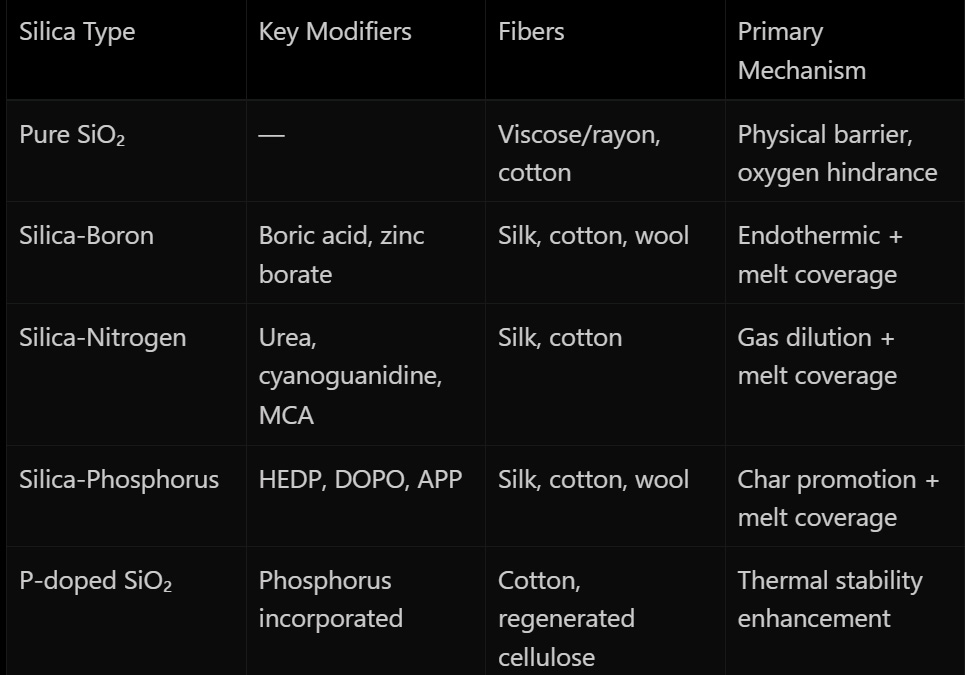
Notice that in order for wool to be a flame barrier, it needs to be treated, either with Silica-Boron or Silica-Phosphorus. Neither of these silica treatments are toxic but it shows that wool, while naturally flame‑resistant (LOI ~25%), often fails because its char layer is too weak to prevent large heat release under this intense burner. However, silica treated wool only works on some applications. Mattresses made with polyurethane foam and latex foam need more than treated wool. This explains why my test on the Arizona Premium mattress with wool still needed a flame barrier fabric. But this also exposes another aspect of this whole issue. If mattress companies could make their mattresses flame retardant with silica treated wool and it would be perfectly safe for consumers, then why didn’t the Consumer Product Safety Commission specify that one safe way? Why allow mattress companies use chemicals that toxic according to their own risk assessment? You can make the argument, perhaps, that different methods are needed for different applications, and that might be perfectly legitimate. So then two questions must be asked of the Consumer Product Safety Commission. One, why not require mattress companies to disclose on the law label what chemicals they use to meet the regulations? Is the CPSC looking out for consumers if their are no disclosure requirements, especially when there is nothing to fear? Shouldn’t consumers be informed of what they are sleeping in? If there are no disclosure requirements, and the chemicals are toxic, this seems to suggest the CPSC isn’t looking out for consumer’s interests. Two, if the CPSC is looking out for consumer interests, why not also regulate how much chemicals a mattress producer can use in their mattresses to prevent overdosing? We’ve proven that some mattresses have too much chemicals in them. We’ve also proven that those chemicals can get out of the mattress and into the sleeper despite the CPSC claiming they don’t.
All of this suggests, like all government agencies, that the Consumer Product Safety Commission is bought and paid for by the chemical industry and large mattress manufacturers. This is called crony capitalism where the government picks the winners and the losers in our economic system. It also explicitly means in this case, consumers are being made to sleep in toxic chemicals to make the chemical industry rich.
In conclusion, the mattress industry is not at all what it seems. From fake, paid-for, review channels that are designed to look like fair and balanced reviews of mattresses, to fake mattress sales where companies mark up prices before they mark them down, to fake warranties where companies exclude from coverage in the fine print the very thing that will go wrong with the mattress, to, lastly, the fire-retardant regulations on mattresses designed to enrich the chemical industry at the expense to consumer’s health, there is only one company sticking their necks out for consumers by educating them and then offering a real quality safe and durable and comfortable natural latex mattress without any fire-retardant treatments: Sleep Essentials.